


Introduction
The global economy is living through one of its most transformative technological revolutions. Artificial Intelligence has become the centerpiece of investment narratives, capital markets speculation, startup ecosystems, and geopolitical strategy. Headlines frequently suggest that AI alone is reshaping productivity, labor markets, and even the nature of economic growth. Yet beneath the excitement and the valuations attached to technology giants, a quieter but far more foundational engine continues to power global output: industrial growth.
From manufacturing hubs in Asia to energy corridors in the Middle East, from infrastructure megaprojects in emerging markets to advanced robotics-driven factories in Europe and North America, the industrial sector remains the backbone of the global economy. Physical production, logistics, construction, mining, energy generation, and large-scale infrastructure are still responsible for the majority of tangible output, trade flows, and employment. While AI is enhancing efficiency and optimizing decision-making, it is industrial capacity—steel plants, semiconductor fabs, shipping networks, power grids, and construction sites—that converts innovation into measurable GDP.
The narrative of “Beyond AI” does not deny the transformative potential of artificial intelligence. Rather, it argues that technological advancement sits atop an industrial base that must expand, modernize, and adapt to sustain long-term economic growth. In 2026 and beyond, global output is still driven primarily by industrial activity, capital formation, and infrastructure expansion. AI may guide machines, but machines still build the world.
The Industrial Backbone of Global GDP
Despite rapid digitalization, manufacturing and industry account for a significant share of global GDP. Industrial output includes manufacturing, mining, utilities, and construction—sectors that produce tangible goods and infrastructure essential to modern life. Even in advanced economies where services dominate employment, industrial production underpins trade balances, export revenues, and productivity gains.
Emerging markets continue to rely heavily on industrialization as their primary pathway to economic development. Countries across South and Southeast Asia, Africa, and parts of Latin America are expanding industrial parks, special economic zones, and export-oriented manufacturing clusters. These nations recognize that large-scale industrial activity creates jobs, attracts foreign direct investment, and builds domestic supply chains.
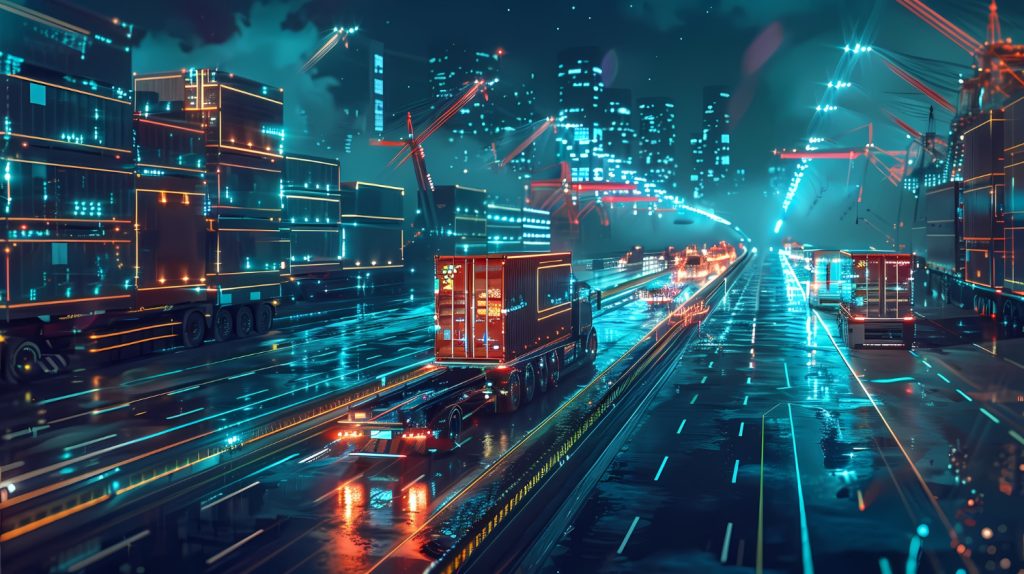
Global trade flows remain overwhelmingly goods-based. Semiconductors, automobiles, machinery, electronics, chemicals, and energy commodities drive international commerce. While digital services are expanding rapidly, the physical shipment of goods across oceans and borders still constitutes the majority of trade volume. Industrial output determines container traffic, freight demand, port utilization, and shipping rates.
Furthermore, capital expenditure in industrial sectors often has multiplier effects. When governments invest in infrastructure—roads, bridges, power plants, ports—they stimulate construction activity, boost demand for raw materials, and enhance productivity across sectors. Industrial growth generates both immediate economic activity and long-term competitiveness.
Even technology firms rely on industrial ecosystems. Data centers require construction materials, energy supply, cooling systems, and semiconductor manufacturing. Electric vehicles depend on lithium mining, battery manufacturing plants, and assembly lines. Renewable energy expansion requires steel, rare earth metals, and large-scale fabrication facilities. The digital economy rests on an industrial foundation.
In this context, AI acts as an enhancer rather than a replacement. Predictive maintenance improves machinery uptime. Automation increases assembly-line efficiency. Logistics algorithms optimize supply chains. Yet none of these functions eliminate the necessity of physical production. Industrial capacity remains the tangible engine converting inputs into goods and infrastructure.
Infrastructure Expansion and Capital Formation
Global output growth is deeply tied to capital formation—the investment in physical assets that expand productive capacity. Infrastructure remains one of the most powerful drivers of sustained economic expansion. Roads, railways, ports, airports, energy grids, telecommunications networks, and water systems enable commerce, reduce transaction costs, and increase productivity.
Across developing regions, infrastructure deficits remain significant. Governments and multilateral institutions are financing large-scale projects to bridge these gaps. Urbanization trends continue to accelerate, requiring housing, transport systems, and public utilities. Construction activity in these regions contributes significantly to GDP growth and employment.
Advanced economies are also reinvesting in infrastructure. Aging bridges, outdated rail systems, and energy grid modernization programs are receiving renewed attention. The global shift toward renewable energy requires trillions of dollars in new infrastructure investments—solar farms, wind turbines, battery storage facilities, hydrogen plants, and upgraded transmission lines. These projects demand materials, labor, engineering expertise, and manufacturing capacity.
Capital formation extends beyond public infrastructure. Private sector investments in factories, logistics hubs, industrial robotics, semiconductor fabrication plants, and energy facilities represent long-term commitments to production capacity. Industrial policy initiatives in multiple countries are encouraging domestic manufacturing to enhance supply chain resilience and reduce dependence on single-source suppliers.
The emphasis on reshoring and “friend-shoring” production has led to new industrial investments in North America, Europe, and parts of Asia. Semiconductor manufacturing plants require billions of dollars in capital expenditure and years of construction. These facilities contribute directly to industrial output and indirectly to technological advancement.
AI may help design smarter cities or optimize construction timelines, but the physical act of building infrastructure remains a labor-intensive and capital-intensive process. Economic expansion ultimately requires roads to be laid, factories to be constructed, and energy systems to be installed. Infrastructure spending is not virtual—it is concrete, steel, copper, and labor.
Energy, Commodities, and Resource Economics
No economy can function without energy. Industrial growth is inseparable from energy production and resource extraction. Despite progress in renewable energy, global demand for oil, natural gas, coal, and nuclear energy remains substantial. Simultaneously, the transition to clean energy has increased demand for metals such as lithium, cobalt, nickel, copper, and rare earth elements.
Industrial production consumes enormous quantities of raw materials. Steel manufacturing, chemical production, cement fabrication, and electronics assembly all require resource inputs. Mining operations, refining facilities, and commodity logistics networks remain fundamental to global output.
Energy infrastructure expansion is particularly significant. Developing countries continue to build power plants and transmission systems to support industrialization. Advanced economies are modernizing grids to accommodate renewable energy integration. Electrification of transportation increases demand for power generation and battery manufacturing capacity.
The green transition itself is industrial in nature. Wind turbines require massive steel towers and precision engineering. Solar panels depend on silicon processing and manufacturing lines. Battery factories involve complex chemical production processes. Hydrogen production facilities require specialized equipment and large-scale engineering.
Commodity cycles continue to influence global growth patterns. Rising demand for industrial metals often signals expanding construction and manufacturing activity. Conversely, commodity price collapses frequently indicate slowing industrial momentum. Financial markets closely monitor industrial commodity indicators as leading signals of economic performance.
AI may enhance exploration efficiency or optimize energy grids, but it cannot replace the physical extraction and processing of resources. The industrial economy remains tied to geology, geography, and logistics. Ships transport iron ore across oceans; pipelines move natural gas across continents; railways deliver coal to power plants. These systems form the circulatory network of global output.
Labor Markets, Urbanization, and Industrial Employment
While automation has transformed manufacturing, industry remains a major employer worldwide. Industrial jobs support middle-class incomes in both developed and developing economies. Construction, mining, utilities, and manufacturing employ millions of workers and create demand for ancillary services.
Urbanization trends continue to drive industrial expansion. As populations migrate to cities, demand increases for housing, transportation, sanitation, and consumer goods. Urban centers require industrial supply chains to sustain growth. Industrial clusters often form around major cities, creating ecosystems of suppliers, logistics providers, and service firms.
The interplay between AI and industrial labor is evolving. Automation may reduce repetitive tasks but also creates new roles in maintenance, programming, robotics oversight, and quality control. Skilled trades—electricians, welders, machine operators, construction engineers—remain indispensable. Industrial productivity improvements often complement human expertise rather than eliminate it entirely.
Emerging economies view industrial employment as a stepping stone toward higher income levels. Export-oriented manufacturing provides access to global markets and technology transfer. Governments frequently design vocational training programs to align workforce skills with industrial needs.
Additionally, industrial wages often stimulate domestic consumption. Workers employed in factories and construction spend income on housing, transportation, retail goods, and services, creating multiplier effects across the economy. Thus, industrial growth not only contributes directly to GDP but also fuels broader economic dynamism.
AI-driven services may capture headlines, but large-scale employment generation in many regions still depends on industrial expansion. A software breakthrough does not automatically generate millions of jobs; factory construction and infrastructure projects do. Industrial growth remains deeply connected to social stability and income distribution.
Supply Chains, Geopolitics, and Strategic Industry
Global supply chains have become central to geopolitical strategy. Recent disruptions—from pandemics to regional conflicts—have highlighted vulnerabilities in concentrated manufacturing networks. Governments now view strategic industries such as semiconductors, pharmaceuticals, energy equipment, and defense manufacturing as matters of national security.
Industrial diversification has become a policy priority. Countries are incentivizing domestic production of critical goods to reduce external dependence. This shift is leading to new manufacturing facilities, logistics networks, and regional trade partnerships.
Supply chain resilience requires redundancy, storage capacity, and diversified sourcing. Warehousing, shipping, and freight infrastructure are expanding accordingly. Industrial parks and free trade zones are being redesigned to enhance flexibility and risk mitigation.
Geopolitical competition increasingly revolves around industrial capacity. The ability to produce advanced chips, electric vehicles, renewable energy equipment, and defense systems determines strategic leverage. Nations investing heavily in industrial ecosystems aim to secure long-term economic and security advantages.
AI enhances supply chain visibility through predictive analytics and real-time tracking. However, analytics alone cannot resolve shortages without sufficient production capacity. Strategic stockpiles and domestic manufacturing remain crucial safeguards.
Furthermore, trade agreements often revolve around industrial goods rather than purely digital services. Tariffs, export controls, and industrial subsidies influence global production patterns. Industrial policy is once again a defining feature of economic strategy worldwide.
The convergence of geopolitics and industrial growth underscores a fundamental reality: physical production matters. The digital layer may coordinate systems, but sovereignty and resilience depend on tangible manufacturing capability.
Conclusion
Artificial Intelligence undoubtedly represents a transformative force in the global economy. It improves efficiency, accelerates research, enhances logistics, and optimizes decision-making across industries. However, the broader economic narrative must extend beyond the AI spotlight. Industrial growth—rooted in manufacturing, infrastructure, energy, and resource extraction—continues to drive the majority of global output.
The world economy remains anchored in physical systems: factories assembling goods, construction crews building infrastructure, power plants generating electricity, and ships transporting commodities. AI serves as a catalyst and multiplier, but it operates within an industrial framework that must expand and modernize to sustain prosperity.
As nations compete for technological leadership, they simultaneously invest in industrial capacity, supply chain resilience, and energy security. The green transition, urbanization, infrastructure renewal, and reshoring initiatives all reinforce the centrality of industry in shaping future growth trajectories.
Beyond AI lies the enduring truth that economic development requires tangible capital, labor, and resources. The machines may become smarter, but they still need steel, silicon, energy, and human expertise. Global output, at its core, is still built—not just coded.